
Interview: Politics, housing, and travel bubbles
It was a pleasure to talk to Andy Thompson on The Muster recently about politics, housing, and how the Trans-Tasman travel bubble help or hinder regional economies.


Benje uses regional insights to empower organisations to make better decisions and monitor outcomes that matter.
Read more It was a pleasure to talk to Andy Thompson on The Muster recently about politics, housing, and how the Trans-Tasman travel bubble help or hinder regional economies.

Everyone keeps telling me we have a tight labour market. But that is not 100% true. There is actually quite a lot of slack in the labour market of people wanting to work more.

It is one year since New Zealand’s initial Covid-19 lockdown, and the property market has confounded expectations since then. Even though rents are increasing in around 80% of New Zealand’s 67 territorial authorities, there remain a few places where rents have fallen in the wake of Covid-19.

The Trans-Tasman bubble will not be a silver bullet for every tourism destination over the winter months. Put simply – many kiwi destinations may struggle to attract Aussie travellers during the colder months, and instead will miss out on New Zealanders who head to warmer destinations across the ditch.

With a two-way Trans-Tasman bubble set to kick off after more than a year of border closures, my mind has turned towards thinking how travel patterns may have evolved in the intervening time.

I recently spoke to Kerre McIvor on Newstalk ZB at length about how employers can solve the challenge of finding and retaining staff. COVID-19 has left some employers exposed, particularly in regions and industries that had relied on a steady stream of itinerant labour from abroad.
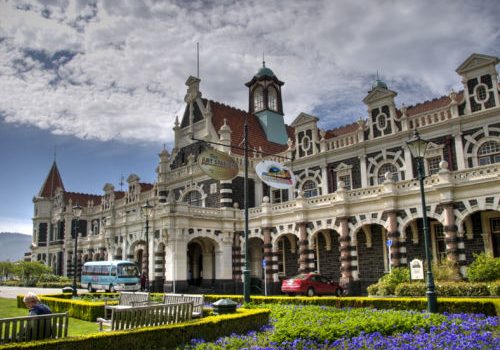
Benje Patterson was commissioned to estimate the economic and social outcomes of Dunedin’s arts and culture sector. The report outlined the benefits to local residents’ quality of life, as well as the reputation and attractiveness of Dunedin to its visitors.

There were 10,827 businesses removed from the Companies Register in September, well up on the lockdown low of 839 in April. Nevertheless, don't get too concerned just yet. Offsetting these closures have been surprising levels of business startups, which rose sharply in the September quarter.
A return to a business-as-usual environment is not necessarily an aspiration shared by all. A fantastic outcome for New Zealand and its regions would be if we can use COVID-19 as a reset to think about how we can do things better.

The average lockdown wage haircut was much smaller than the fall in mortgage expenses because of lower interest rates. Consequently, in net terms, an existing homeowner earning an average income was actually better off.

New Zealand’s export performance has been an enduring good news story. Incredibly, the expansion to the trade surplus during 2020 has more than offset the reduction of foreign visitor spending to date.

A tight housing market has continued to put pressure on renters in many parts of the country at a time when incomes are squeezed. But the geographical distribution of rent increases has been uneven.